
 Image 1 of 1
Foraging Mushrooms, Food & Medicine from the Forest
Foraging Mushrooms, Food & Medicine from the Forest
Wooded areas historically are an important source of food, as well as useful for many other purposes. Join experienced forest farmer Chris Parker on a hands-on workshop finding and harvesting food from the forest. Learn new and ancient methods for increasing the food capacity of your forest or woodland. The workshop will cover trees and shrubs that produce edible parts (leaves, flowers, shoots, seeds, nuts, pods, bark, needles, fruits, saps, and roots) with a strong tilt toward mycology and reading the landscape and polycultures of plants, trees and shrubs to know what mushrooms should be growing on this land throughout the year. If fungi are missing from the land, strategies will be covered on how to reintroduce them. The workshop will also cover the many additional species in a woodland that also are important sources of food including, herbaceous plants, vines, animals, insects, and roots. Additionally the workshop will cover the importance of reciprocity as we explore the mutual benefits we and the forest provide each other.
Additional workshop info:
Join us for lunch (included), from noon-1pm
All workshop materials are included
This workshop is eligible for use with a season pass.
Youth under 18 may attend free with an adult registered for the same workshop (1 youth per adult).
Instructor: Chris Parker
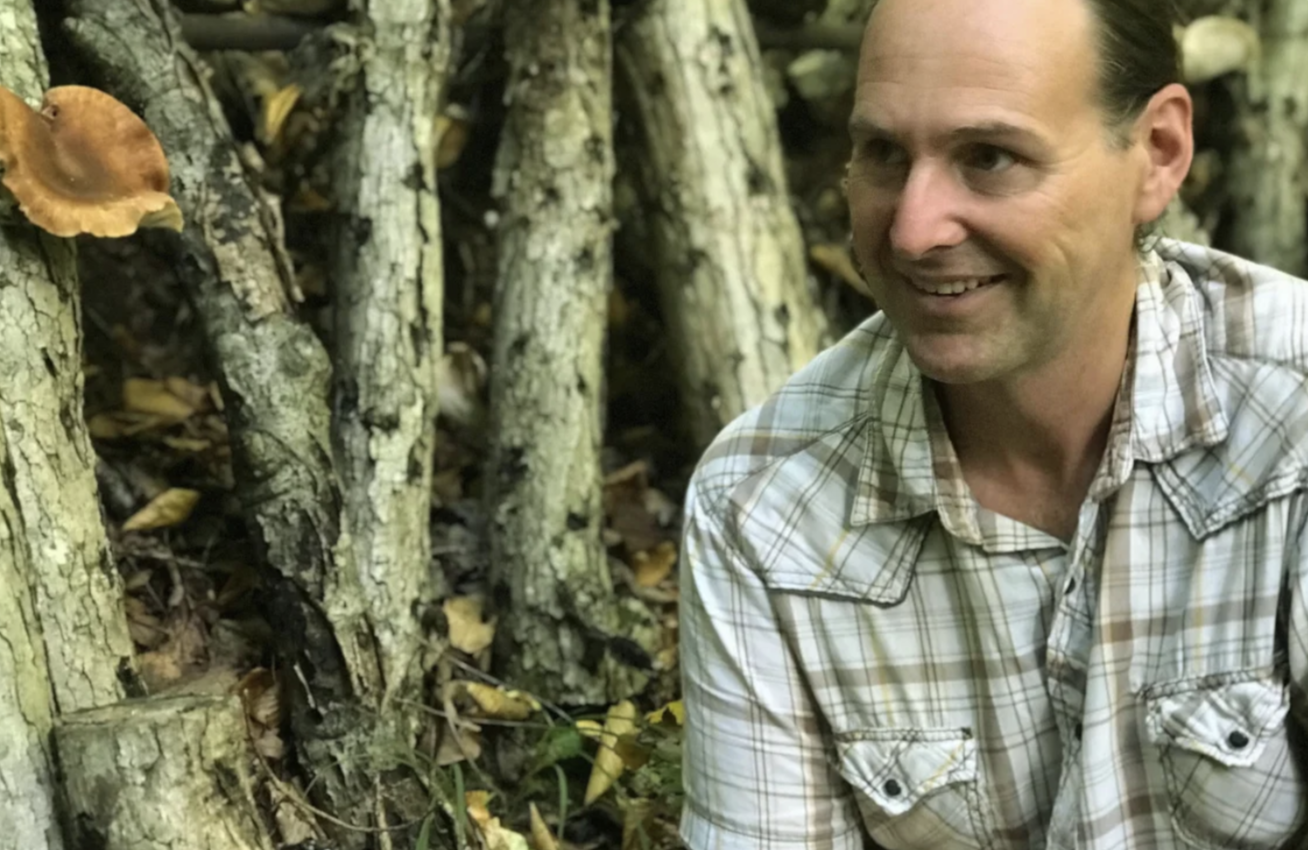
Chris Parker is one of the founders of The Forest Farmacy: A School of Applied Eco-Mycology. “We believe mushrooms grow more than food—they grow community, resilience, and meaning.”
Christopher Parker, a member of the Eastern Band of Cherokee Indians, is a Culture Keeper—maintaining fungal culture libraries, seed and spore banks, and the living knowledge of how to use fungi to regenerate forests and feed people. He brings decades of hands-on experience in mushroom cultivation, forest tending practices, and regenerative design. Together with Katherine Parker, he has built a farm in the mountains of Western North Carolina and an online school for people who want to walk a different path—one that’s ancient, alive, and wildly fulfilling.
“The Forest Farmacy” reflects a simple truth: The forest offers food and medicine—but only when we engage it with reverence, responsibility, and reciprocity.
This isn’t passive foraging or extractive agriculture. It is reciprocal cultivation – wild co-tending – a sacred relationship between people and place, rooted in mutual care, where cultivating the forest also means feeding future generations.