 Image 1 of 1
Natural Building
An Introduction to Natural Building through Cob and Plaster
with Greg Allen
Join us for a hands-on introduction to Cob and Clay Plaster. These are two great ways to use earth (specifically clay subsoil) in construction. Earthen construction has been around for thousands of years, and in many different forms across the globe. There are many examples of earthen buildings still in use today that are many centuries old!
We'll start by foot-mixing cob, and then applying it. Then we'll switch gears to mixing and applying clay plaster. It's interesting to experience one right after the other, because you'll see that they both utilize the same set of "ingredients": clay soil, aggregate, and straw. However, they are processed and applied differently, because they serve different functions in a building.
Cob is also known as "monolithic adobe." With it, you can create a wall that is load-bearing, fireproof, rodent-proof, and with incredible thermal mass (which helps with temperature regulation). Cob can be built free-form, or in a formwork. It is a uniquely sculptable building material - you can shape walls into a curve, carve alcoves, and add relief work directly onto the wall. There is a cob addendum in the building codes now, so there is now the potential to have a legal cob residence.
Clay Plasters can be applied to a multitude of natural wall subtrates (cob, straw bale, slip-straw, hempcrete, wattle and daub, etc...). They can also be used on drywall, wooden lath, and other more conventional substrates. These plasters can be very decorative and aesthetically-pleasing, help regulate humidity, and are easy to repair. When done right, they provide a very strong wall surface.
There will be lots of hands-on experience in a short amount of time, and plenty of time throughout for questions!
Join us for lunch (included), from noon-1pm
All materials are included.
This workshop is eligible for use with a season pass.
Youth under 18 may attend free with an adult registered for the same workshop (1 youth per adult).
Early-bird pricing ($55). Regular rate: $75.
Meet the Instructor: Greg Allen
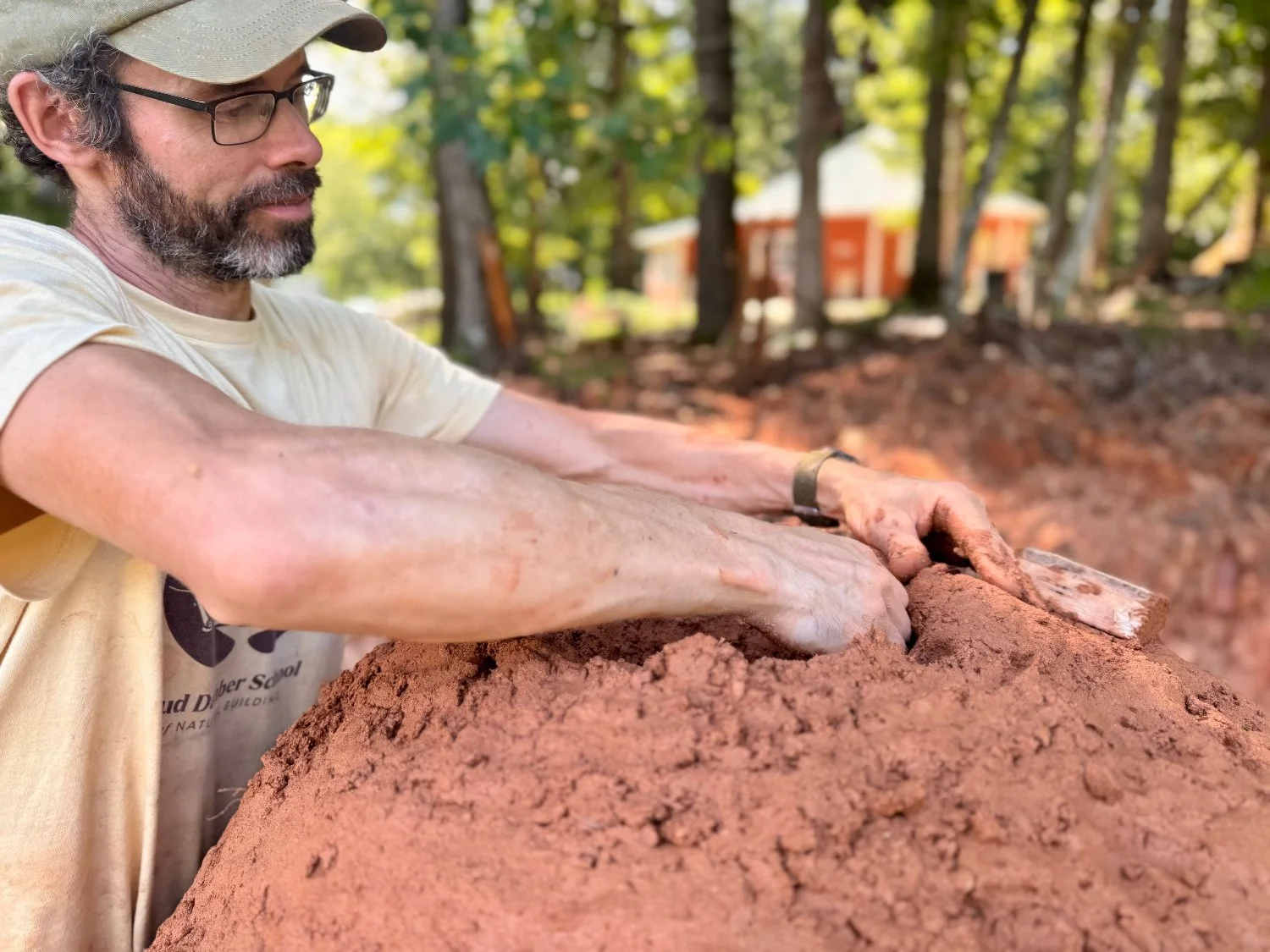
Greg is the co-founder and lead instructor at the Mud Dauber School of Natural Building in North Carolina.
He apprenticed at the Cob Cottage Company (with Ianto Evans and Linda Smiley) in 2008, and left that experience feeling passionate about spreading the knowledge and joy of natural building to others. He began teaching workshops in central North Carolina in 2009, and then bought rural land and started a homestead with Danielle in 2014. This is when we officially began teaching under the Mud Dauber School name, and at our current campus.
Greg was born and raised in Syracuse, NY. Favorite childhood memories involve camping in the Adirondack Mountains, cross-country road trips with his family, drawing/designing tiny living spaces, building with Legos, and endlessly making art. He formally studied Industrial Design at Syracuse University. While there, he fell in love with the process of design, enjoyed pottery classes, and interned at a small organic farm. All of these things were formative in leading him to natural building.
In addition to instructing workshops, Greg has been involved in contract work in the Central NC area since 2010. He has had his NC General Contractor’s license since 2017. In addition to conventional work, he has built a handful of straw bale residences, many naturally-built backyard studio spaces, and a variety of other custom design/build projects. His work is featured at the Museum of Life and Science in Durham, Sanctuary Farm, and at many local private residences. He also regularly presents on natural building at local libraries and events.