 Image 1 of 4
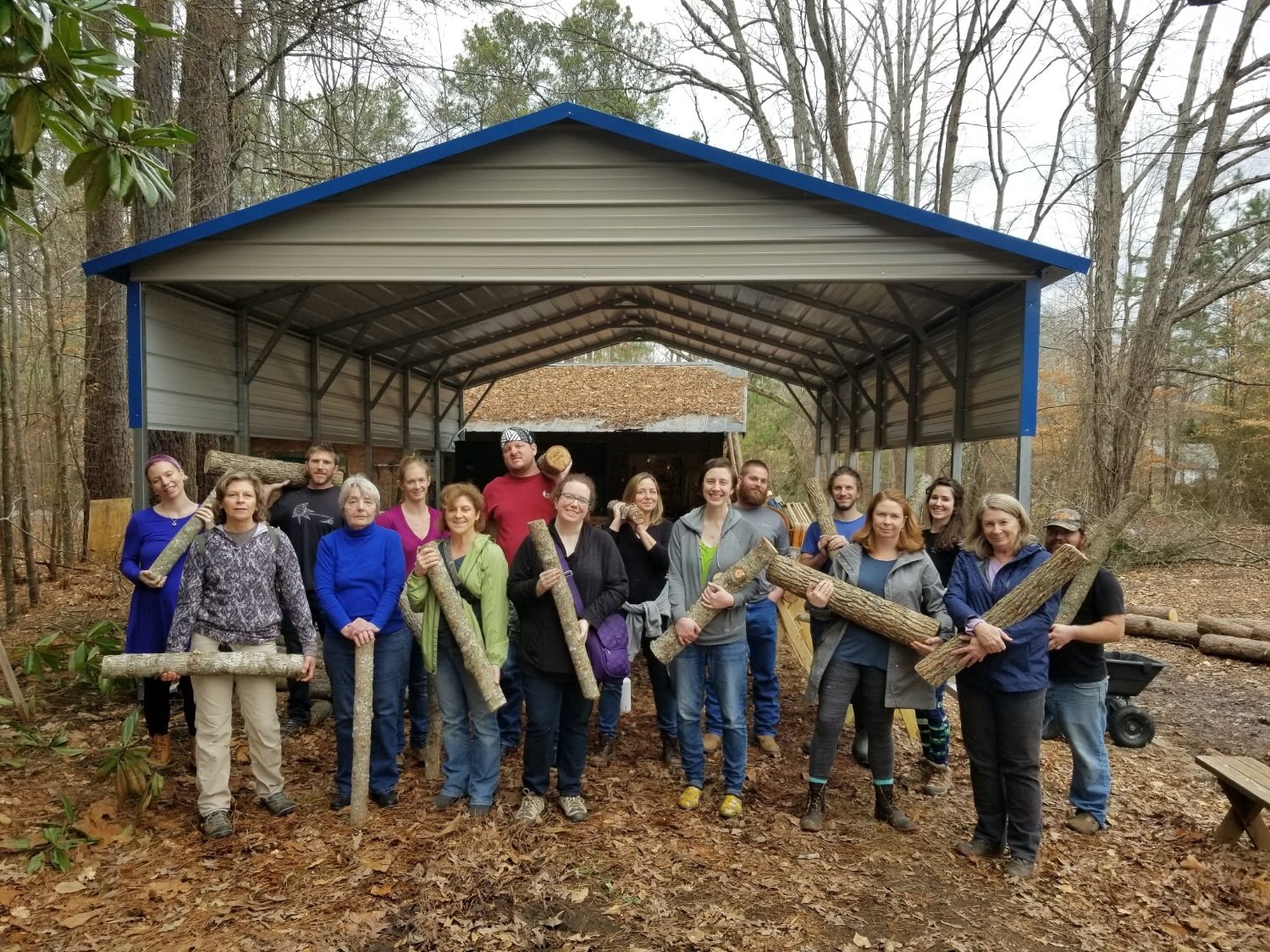 Image 2 of 4
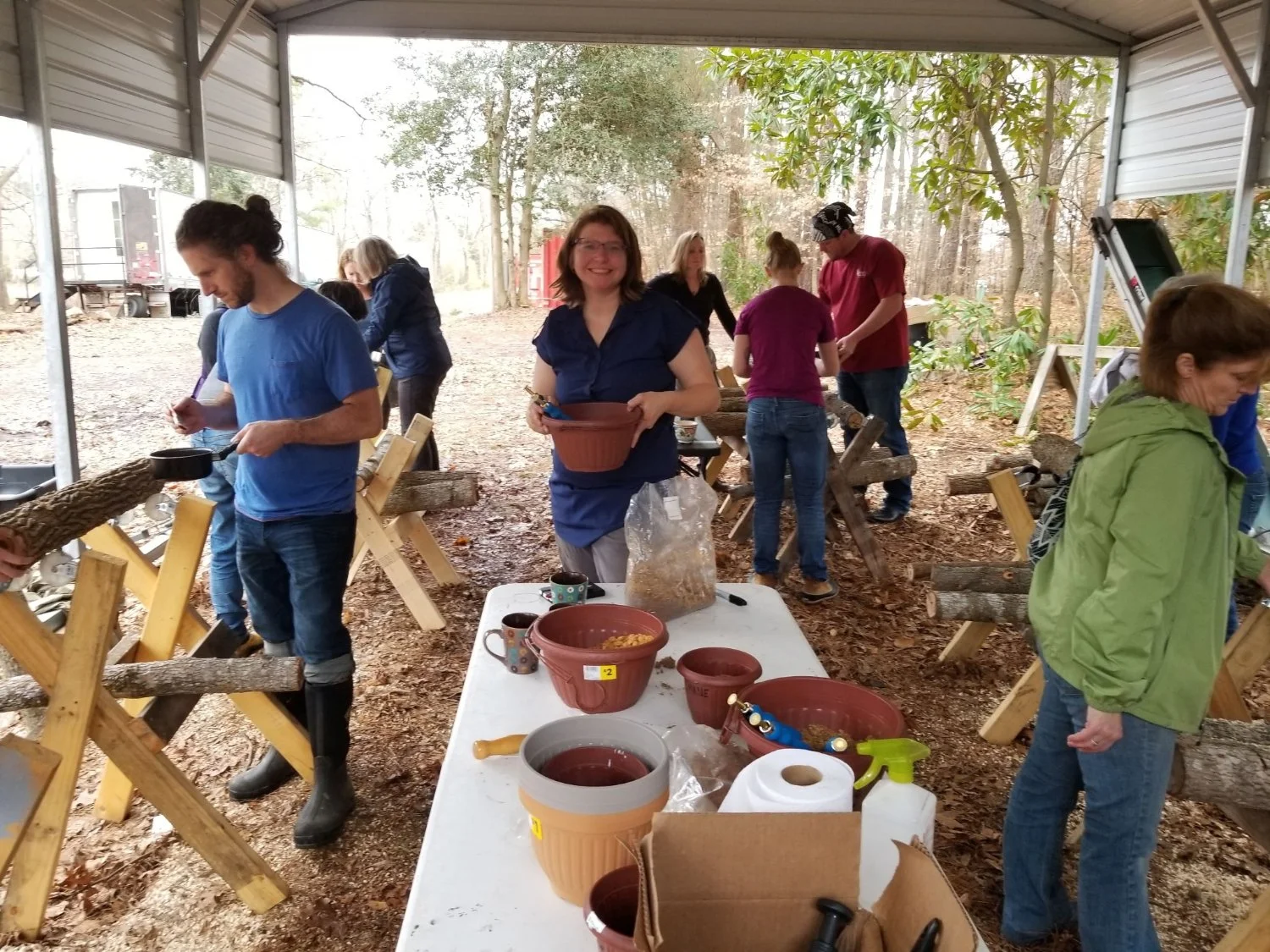 Image 3 of 4
 Image 4 of 4
How to grow mushrooms on logs
Haw River Mushrooms has been running this popular class since 2018 and has sent thousands of mushroom logs out into the world to bear food. They believe the mushroom garden should be as common in North Carolina as the tomato garden! Inoculated mushroom logs extend your garden or farm growing season and are about the most low-maintenance “pet” you’ll ever own.
Join us for a fun, learning-filled 3-hour, hands-on workshop focused on mushroom log inoculation. Participants will inoculate two mushroom logs during class to take home, and learn everything needed to care for those logs successfully. We’ll also cover how to cut and inoculate your own logs at home if you want to keep going.
Mushroom varieties: We’ll have blue oyster and shiitake spawn available. You may choose any combination you like for your logs (for example: two shiitake, two oyster, or one of each).
Transporting your logs: Logs are approximately 2 feet long and 3–6 inches in diameter. They fit in even a small car trunk. You may want to bring a trash bag or container to keep your vehicle clean.
Growing your logs at home: Logs do best in a shady area with good air circulation and access to water, such as under a tree or near a house. Past participants have successfully fruited logs on apartment balconies, in home gardens, and in wooded areas. Logs are very low maintenance. We’ll cover practical strategies to ensure your logs get the light, air, and moisture they need.
Fruiting timeline and lifespan: Most participants see their first mushrooms within 5–8 months. Logs typically take about 6 months to fully colonize, then fruit when temperature and moisture conditions align (often fall for spring inoculations, late spring for winter inoculations). Logs generally last about one year per inch of diameter, or 3–5 years, and many produce multiple harvests each season.
If your logs don’t fruit: Log inoculation is a form of agriculture, and variables like weather, contamination, environment, or ancient curses can affect results. If none of your logs fruit after one year, contact the farm for troubleshooting. If you can bring the log back, it may be added to our “Island of Misfit Logs,” where underperforming logs often surprise us. If inventory allows, we’re happy to exchange it for a new log.
All materials are included.
This workshop is eligible for use with a season pass.
Youth under 18 may attend free with an adult registered for the same workshop (1 youth per adult).
Early-bird pricing ($55) is available through Feb. 7. After that, the cost is $75.